A visual essay on Nassim Taleb's Antifragile
What is the opposite of fragile?
If you ship a box of wine glasses, you slap a ⚠️ FRAGILE sticker on it. What would you write on a box that benefits from being shaken? Most people say robust. It isn't.
English doesn't have the word. Taleb had to coin one. The thing he named is behind everything that has changed with time: evolution, culture, ideas, revolutions, your own career. Let's find it.
I
How to Love the Wind
Wind extinguishes a candle and energizes fire.
Same force. Opposite outcome. The candle needs calm — it's fragile. The fire feeds on the very thing that kills the candle. This is Taleb's opening image, and it contains the entire book.
But what does this look like as data? Watch two systems hit by the same random shock.
🕯️ Fragile
🔥 Antifragile
II
Between Damocles and Hydra
Damocles dines under a sword suspended by a single horsehair. One gust and it drops.
The Phoenix burns to ash and is reborn, unchanged. The Hydra, when you cut off one head, grows back two. Three mythological characters, three responses to the same force. Taleb uses them to name the spectrum.
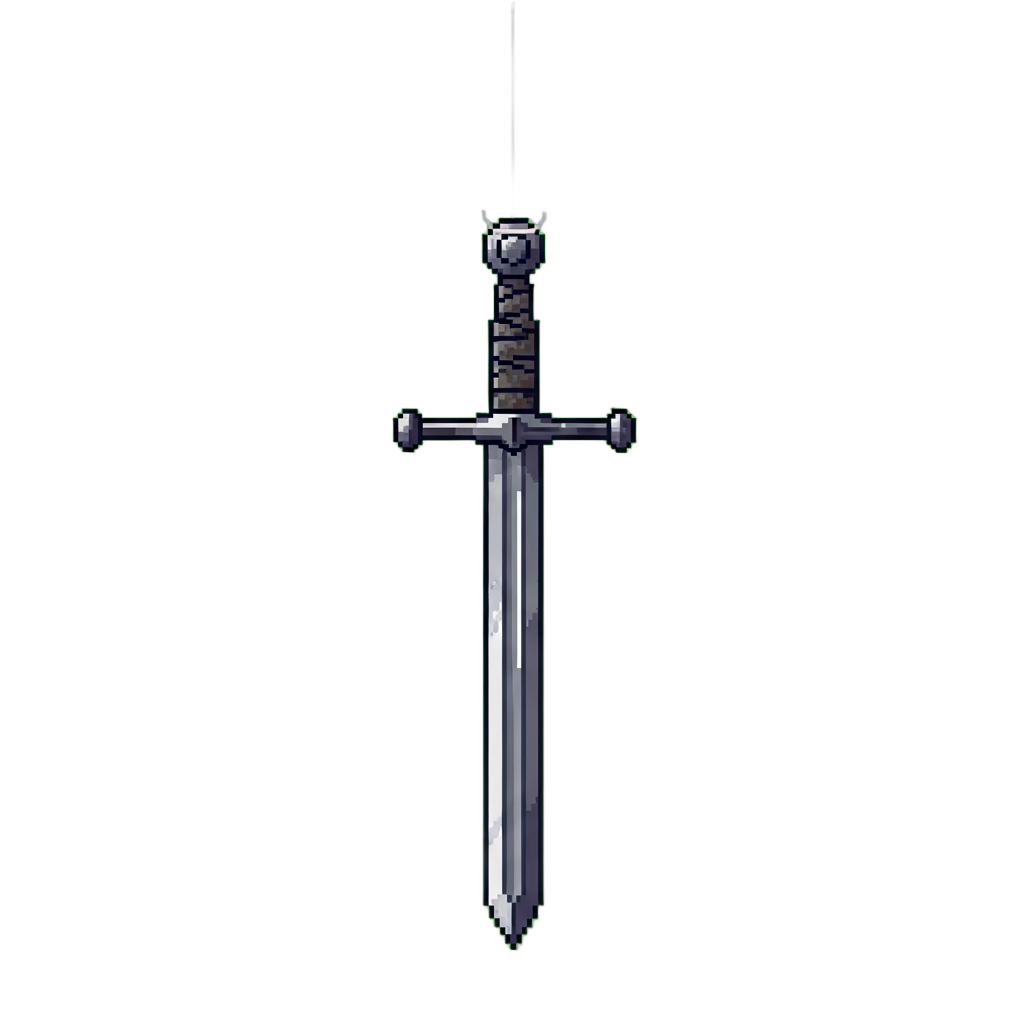 Fragile Hates volatility. Harmed by shocks. Needs calm.
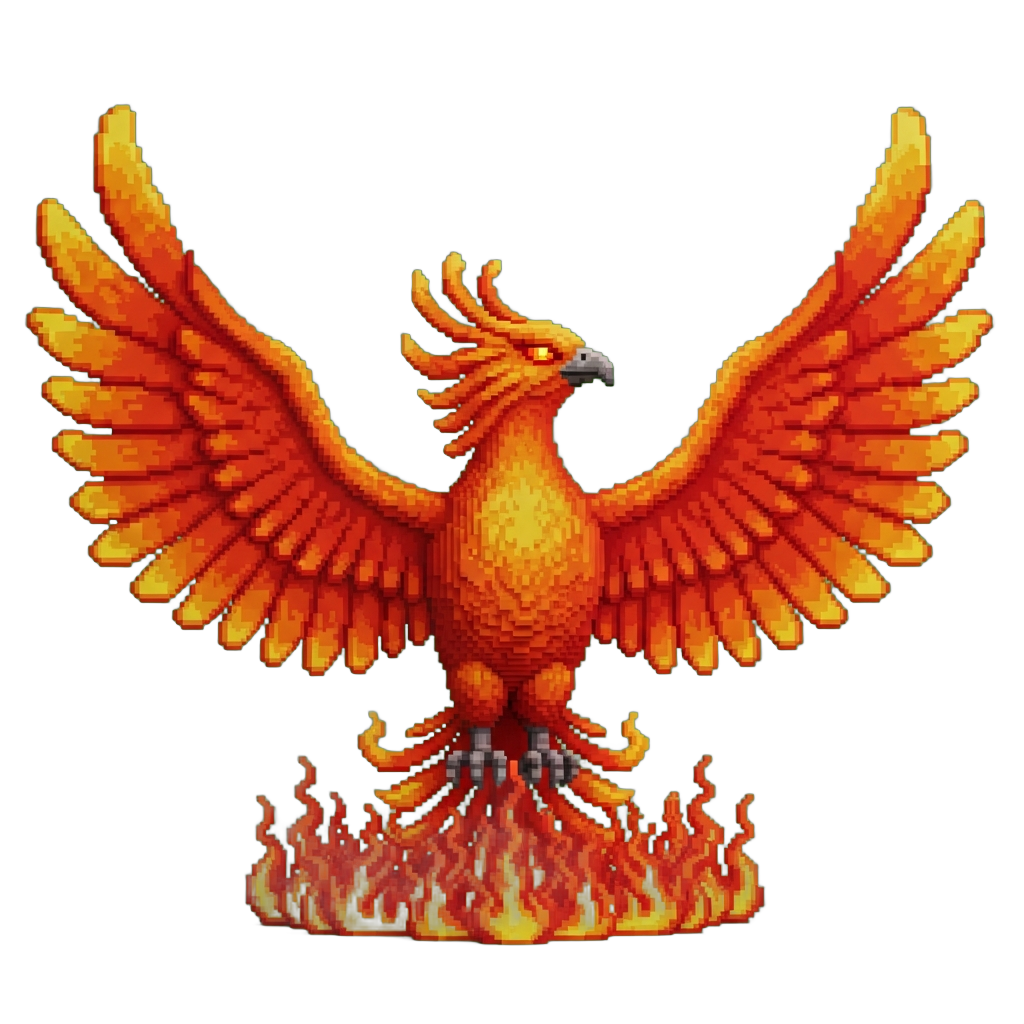 Robust Indifferent to volatility. Neither helped nor harmed.
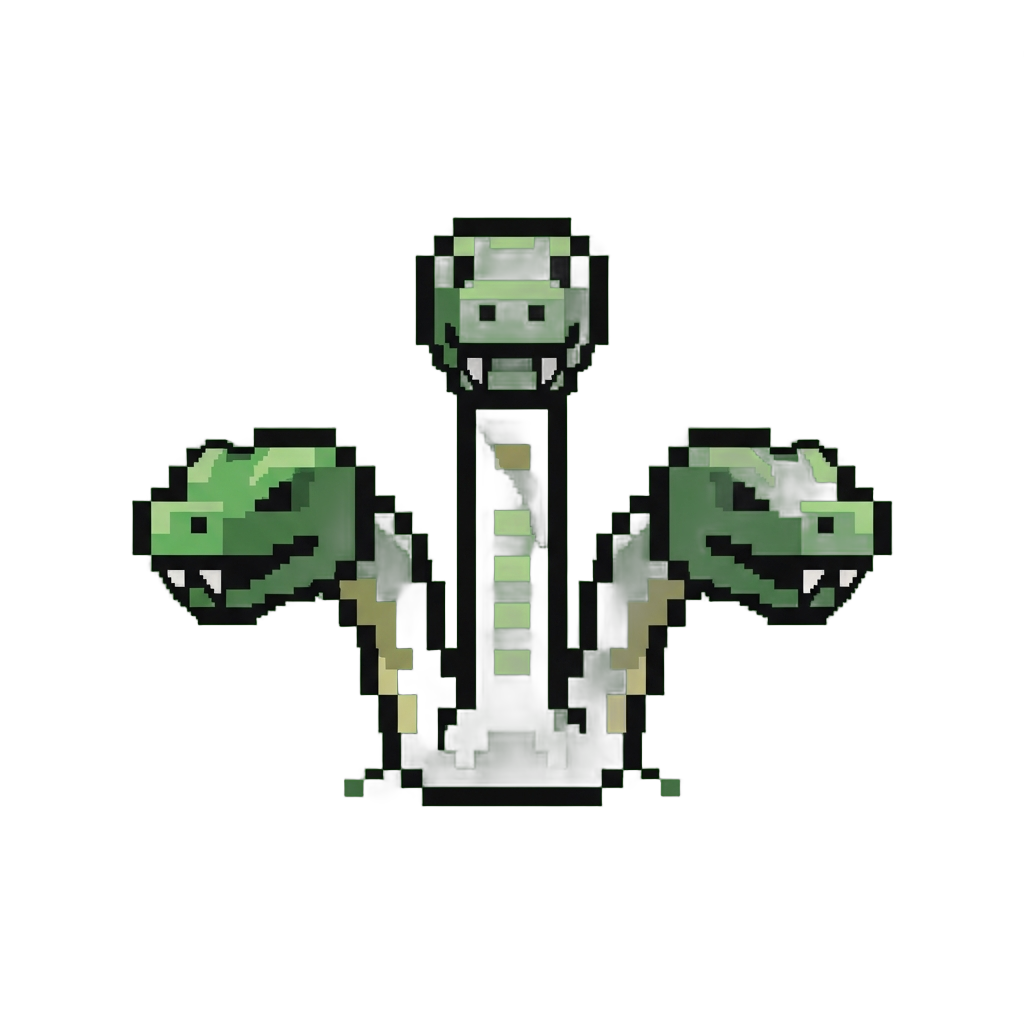 Antifragile Loves volatility. Gains from disorder. Grows stronger.
English has words for the first two — but not the third. Gaining from disorder needed a new word. So what does the difference actually look like?
Toggle between the three. Watch how the shape of possible outcomes changes — where the tail gets fat tells you everything.
Fragile
Fat left tail. Large losses lurk unseen.
III
Stone and Pebbles
Now we know the categories. But why does one thing break and another grow? The answer is hiding in a parable about a king.
The king swore he would crush his son with a stone. After he calmed down, he was in trouble — a king who breaks an oath is unfit to rule. His advisor found a solution: cut the stone into a thousand pebbles.
Same total weight. Completely different harm. A ten-pound stone hurts more than twice as much as a five-pound stone, more than five times a two-pound stone. Harm isn't proportional — it accelerates. This is the mathematical engine behind fragility. Scroll through to see it.
A pebble. Barely a scratch. Harm is proportional.
A handful of stones. The bruise is already worse than four scratches.
A heavy rock. Harm accelerates — it's no longer proportional.
A boulder. The curve bends hard. Damage compounds.
One massive stone. Near maximum harm. Concavity is the trap.
IV
Naive Intervention
If nonlinearity is the engine of fragility, here is its most common vehicle: people trying to help.
A doctor treats a mild headache. The headache goes away. A year later the patient returns with liver failure. The Greeks had a word for this: iatrogenics — harm caused by the healer.
The concept applies everywhere. Governments intervene in economies, creating fragility. Managers intervene in teams, killing optionality. Every time someone says "we have to do something," ask: compared to what?
The benefit is visible and certain. The harm is hidden and catastrophic. The orange area exceeds the blue.
So what do you do instead? Taleb's answer has a name: via negativa. Don't ask what to add. Ask what to remove. Subtraction has fewer side effects than addition.
Additive (fragile)
More medicine
More regulation
More advice
More complexity
Subtractive (robust)
Remove the harmful
Remove rent-seekers
Remove fragilities
Remove layers
V
Fat Tony
Removing fragility is half the answer. The other half is positioning for upside. Nobody understood this better than Fat Tony.
Fat Tony is Taleb's recurring character — a trader from Brooklyn who makes his living from other people's blindness. He doesn't predict the future. He arranges his affairs so that prediction becomes unnecessary.
During the run-up to the Iraq war, Tony noticed that the market priced oil as if nothing would happen. So he bought options — contracts that cost almost nothing if he was wrong, and paid enormously if he was right.
The barbell: floor your losses, keep the upside open
$300,000 became $18 million. Not because he predicted the war. Because he didn't need to. The key was asymmetry: limited downside, unlimited upside.
Taleb calls this optionality — the right but not the obligation. An option is an agent of antifragility. You pay a small price for the privilege of asymmetry: you lose small when wrong, you earn big when right. If you make more when you are right than you are hurt when you are wrong, you will benefit from volatility. You want volatility.
Drag the slider. Watch what happens to a convex and concave position as shocks grow.
The curves diverge. The convex position gains more than it loses. The concave one loses more than it gains.
VI
The Turkey
One last parable. This one is a warning.
A turkey is fed every day for a thousand days. Every feeding confirms — with increasing statistical confidence — that butchers love turkeys.
Day 1,001 is Thanksgiving.
Confidence was maximal at the precise moment risk was highest. The turkey confused absence of evidence of harm with evidence of absence of harm. Stable history was not safety. It was a trap building in silence.
This is the central illusion. The longer things appear stable, the more fragile they've become — and the more people trust the stability. The turkey's mistake was not ignorance. It was certainty.